 Back to News & Articles

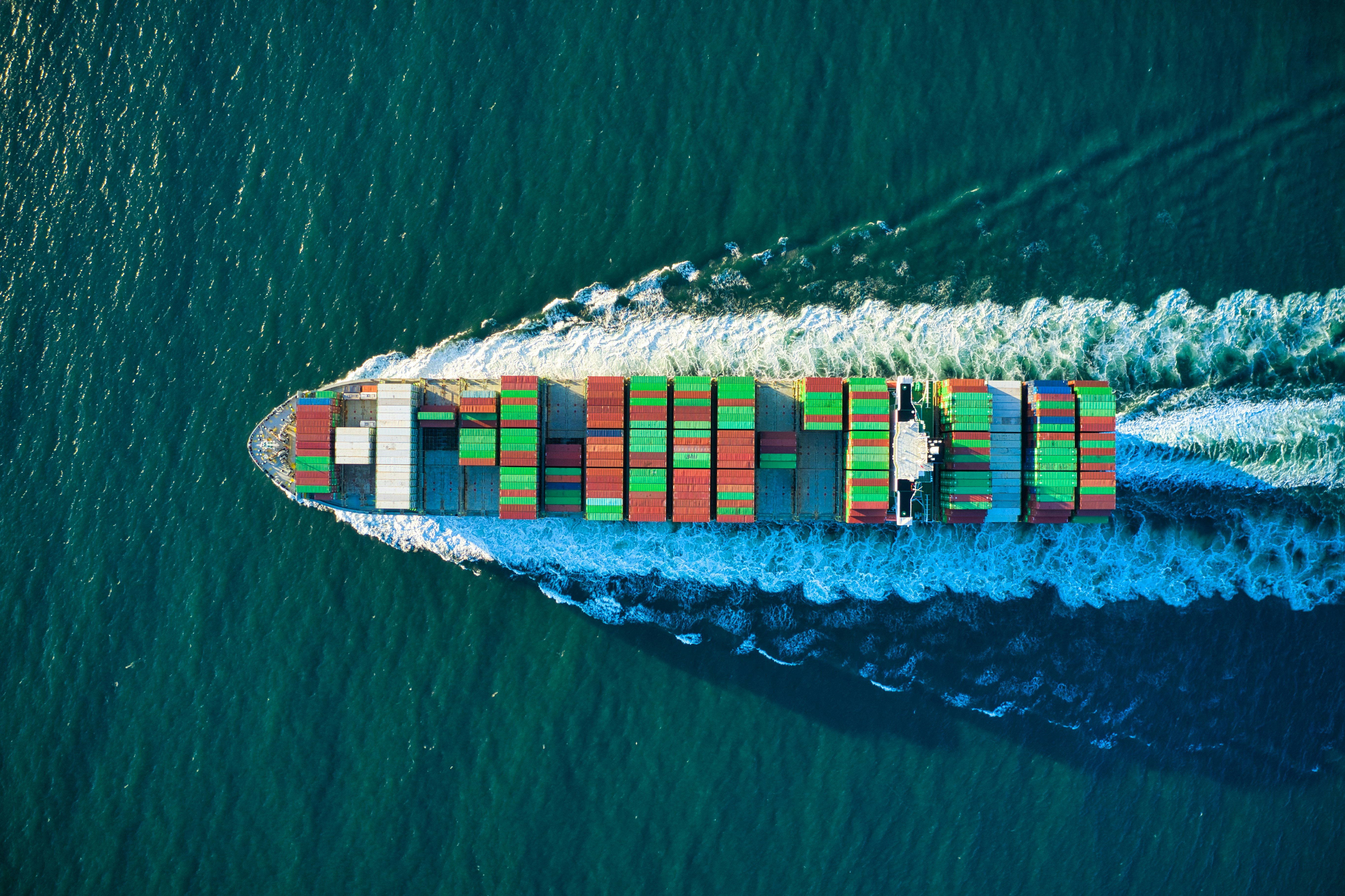
The Red Sea and Suez Canal remain among the most important corridors in global maritime trade. For decades, the Suez Canal has provided a direct maritime link between Asia and Europe, allowing vessels to avoid the much longer journey around the Cape of Good Hope.
That equation changed significantly after attacks on commercial vessels in the Red Sea disrupted shipping through the Bab el-Mandeb Strait. Many major carriers began rerouting vessels around the southern tip of Africa, adding days or even weeks to voyages and increasing fuel, vessel-operating and insurance costs.
By 2026, the situation has become more nuanced. Some shipping services have cautiously returned to Suez, while others continue to use the Cape of Good Hope. At the same time, renewed attacks in the Red Sea have demonstrated that the security situation remains uncertain. The International Maritime Organization (IMO) reported renewed attacks on international shipping in July 2026.
For shippers, importers, exporters and supply-chain planners, the key question is therefore no longer simply “Is the Suez Canal open?” It is:
What is the safest, most reliable, and economically viable routing for a particular shipment?
Why the Red Sea and Suez Canal matter to global shipping
The Suez Canal connects the Mediterranean Sea with the Red Sea, creating a critical shortcut between Europe and Asia.
For a vessel travelling between major Asian and European ports, using Suez can significantly reduce the distance compared with sailing around Africa. The alternative Cape of Good Hope route requires substantially more sailing time, fuel and vessel capacity.
This difference becomes particularly important for container shipping because a vessel operating on a longer route is effectively tied-up for more days. That reduces the number of voyages it can make within a given period and can affect available capacity across the wider network.
The disruption therefore extends beyond the individual vessel.
A longer voyage can cost:
- Vessel availability
- Container availability
- Port schedules
- Transshipment connections
- Equipment positioning
- Freight rates
- Inventory planning
- Delivery commitments
- Working capital requirements
UN Trade and Development (UNCTAD) reported that rerouting caused global shipping distances to increase sharply and that, by May 2025, tonnage moving through the Suez Canal remained about 70% below 2023 levels.
What changed after the Red Sea disruption?
For shipping lines, sending vessels through an area with elevated security risks can create operational, insurance and crew-safety concerns. As a result, many carriers chose to divert vessels away from the Red Sea and Suez Canal.
Instead of:
Asia → Red Sea → Suez Canal → Mediterranean → Europe
vessels were increasingly routed:
Asia → Indian Ocean → Cape of Good Hope → Atlantic → Europe
The second route is considerably longer.
This is important because the impact of rerouting is not limited to the additional nautical miles. Every additional day at sea can add fuel consumption, vessel operating costs and exposure to schedule disruption.
Transit times: why a longer route can create a bigger supply-chain problem
The most visible impact of Red Sea disruption is longer transit time.
Consider an Asia-to-Europe shipment.
A vessel using Suez follows a relatively direct route through the Indian Ocean, Red Sea and Mediterranean. A vessel travelling around the Cape must cover a substantially greater distance.
That can translate into additional days at sea.
But the bigger issue for cargo owners is often schedule reliability, rather than the sailing time alone.
A shipment scheduled to arrive 30 days after departure is easier to plan around than one with a nominal 35-day transit but significant uncertainty around the actual arrival date.
When vessels are rerouted, several additional variables can enter the equation:
1. Longer sailing distances
The vessel simply spends more time travelling between ports.
2. Port schedule changes
A longer voyage can cause vessels to arrive later than originally planned, potentially affecting subsequent port calls.
3. Transshipment connections
For cargo moving through hubs, a delayed mother vessel can result in missed feeder connections.
4. Port congestion
Changes in vessel arrival patterns can create periods of vessel bunching, placing additional pressure on terminals.
5. Container availability
Longer vessel cycles mean containers remain in transit for longer, potentially tightening equipment availability in certain locations.
6. Inventory uncertainty
Importers may need to carry additional safety stock when transit times become less predictable.
This is why the Red Sea issue should be viewed as a network disruption, rather than simply a longer sailing route.
What does this mean for freight costs?
The relationship between routing and freight rates is not as simple as “longer route = higher freight rate.”
Freight pricing is influenced by multiple factors, but not limited to:
- Fuel prices
- Vessel supply and demand
- Available container capacity
- Canal charges
- War-risk insurance
- Port congestion
- Equipment availability
- Carrier network changes
- Seasonal demand
- Bunker adjustment mechanisms
- Emergency or disruption-related surcharges
However, rerouting around Africa can create significant additional operating costs.
UNCTAD noted that Red Sea rerouting increased voyage distances, reduced effective shipping capacity and raised operating costs. The organization also reported that container freight rates became highly volatile during the disruption.
Fuel is one of the biggest contributors
A longer voyage means more fuel consumption.
For a large container vessel, even a relatively small increase in daily fuel consumption can become significant when multiplied across many additional sailing days.
Carrying the extra bunkers required for a longer leg does add slightly to consumption, as a heavier vessel sits deeper in the water and meets more resistance. On a ship, however, this effect is marginal — fuel is a small share of total displacement, and the penalty falls away as it is burned off. Speed matters far more: consumption rises roughly with the cube of speed, so a decision to steam faster in order to protect weekly service frequency outweighs any weight penalty. Bunker capacity is not a limiting factor either, since a large container vessel can complete the Cape leg without an additional refuelling call. What does change is where vessels bunker, shifting away from the Suez corridor hubs towards ports such as Singapore, Mauritius, Durban and Las Palmas, where supply is thinner and prices often carry a premium.
The additional fuel cost can ultimately influence freight rates, although carriers may recover these costs through a combination of base-rate adjustments and surcharges.
Vessel utilisation also matters
Imagine a vessel that normally completes a certain number of round trips each year.
If every round trip becomes significantly longer, the same fleet may be able to complete fewer voyages.
That effectively reduces available vessel capacity.
This is one reason why a disruption to one maritime corridor can influence freight rates far beyond the vessels physically travelling through the Red Sea.
War-risk insurance and security-related costs
Another important factor is the cost of operating in a high-risk maritime area.
When security risks increase, shipowners and operators may face higher insurance premiums or additional war-risk coverage requirements.
The economic decision therefore becomes a comparison between:
Cost of using Suez + security/insurance risk
and
Cost of avoiding Suez + additional fuel + vessel time + operating costs
For some voyages, using Suez may still be economically attractive because of the substantial time savings.
For others, the security premium and operational risk may make the longer Cape route more attractive.
This calculation can change quickly as geopolitical conditions develop.
The Suez Canal is not simply “closed” or “open”
One of the most important developments in 2026 is the gradual and uneven return of some shipping services to the Suez Canal.
This means that describing the situation as either “Suez is open” or “Suez is closed” can be misleading.
The Suez Canal Authority stated in March 2026 that traffic was moving in both directions, with 56 vessels transiting the canal that day. However, the authority also acknowledged that some major shipping lines had temporarily suspended Suez transits depending on regional security developments.
Some services are returning to Suez, while security risks remain an important consideration.
Suez vs. Cape of Good Hope: What changes for shippers?
|
Factor |
Suez Canal Route |
Cape of Good Hope Route |
|
Distance |
Shorter |
Longer |
|
Transit time |
Generally faster |
Generally slower |
|
Fuel consumption |
Lower |
Higher |
|
Vessel utilisation |
More efficient |
Lower due to longer voyages |
|
Security exposure |
Higher regional risk |
Avoids Red Sea/Bab el-Mandeb risk |
|
Insurance considerations |
Potentially higher war-risk exposure |
Different risk profile |
|
Schedule predictability |
Dependent on security situation |
Longer but potentially more predictable |
|
Freight impact |
Canal fees + security-related costs |
Additional fuel and vessel-time costs |
|
Network impact |
Greater vessel availability |
Can tighten effective capacity |
|
Best suited for |
When security and operational conditions permit |
When avoiding Red Sea risk is prioritised |
The important point is that neither route has a universally lower cost.
The most economical option depends on the individual trade lane and the prevailing combination of fuel prices, vessel rates, canal charges, insurance costs and security conditions.
Why freight rates can remain elevated even when vessels return to Suez
It may seem logical that freight rates should immediately fall once carriers begin returning to the Suez Canal.
In reality, adjustments can take time — and not only for commercial reasons. The perceived security risk tends to stay elevated and crewing agreements reflect that. Seafarers covered by International Bargaining Forum (IBF) contracts have the right to refuse to sail through the Red Sea's High Risk Area, with shipowners obliged to either reassign them or cover repatriation and compensation costs. So even where an owner is commercially ready to route back through Suez, they may struggle to crew the voyage, or may only be able to do so by paying a High Risk Area premium — a further cost that delays the point at which Suez routing becomes cheaper than the Cape alternative.
During an extended period of Cape rerouting, carriers may have changed their vessel rotations, capacity deployment and schedules.
Once services begin moving back through Suez, the network has to rebalance.
For example:
Cape routing → longer voyage → more vessels required
can eventually become:
Suez routing → shorter voyage → fewer vessel-days required
That transition can affect capacity across multiple trade lanes.
In addition, freight rates are influenced by demand. If cargo volumes remain strong while carriers are still adjusting capacity, rates may not decline immediately.
UNCTAD has described freight-rate volatility as a continuing feature of the current maritime environment, with geopolitical tensions, supply-demand imbalances, and changing trade routes all contributing to uncertainty.
The impact on Asia–Europe trade
The Asia–Europe trade lane has been particularly exposed to Suez-related disruption.
Manufacturers and exporters in countries such as China, India, Vietnam, South Korea and other Asian markets depend heavily on maritime connections to Europe.
When vessels take longer routes, businesses can experience:
- Longer order-to-delivery cycles
- Higher landed costs
- Greater inventory requirements
- Less predictable ETAs
- Additional working capital requirements
- Greater difficulty coordinating production and distribution
For businesses operating tight inventory cycles, even a relatively small change in transit reliability can have a material operational impact.
This is especially important for industries where components or finished products are shipped internationally on a recurring basis.
What about India–Europe shipments?
The Red Sea and Suez developments are particularly relevant to Indian exporters and importers trading with Europe.
India's location means that the Red Sea is a major part of the maritime connection between the Indian subcontinent and European markets.
A change in routing can therefore affect:
India → Mediterranean
India → North Europe
and connecting services through major transshipment hubs.
For Indian businesses, the practical effect may be seen in longer transit windows, revised sailing schedules, changes in vessel rotations and fluctuations in freight costs.
The impact can vary significantly by port pair and carrier service, so businesses should avoid applying a single blanket transit-time assumption to all India–Europe shipments.
LCL shipments can experience additional complexity
The impact is not limited to full-container load.
For Less than Container Load (LCL) cargo, routing changes can have an additional network effect because cargo may move through consolidation and deconsolidation points.
An LCL shipment may involve:
Origin pickup → CFS → Consolidation → Main ocean leg → Transshipment → Destination CFS → Final delivery
If the main ocean leg changes, the effect can potentially flow through the entire shipment.
A delay in the main vessel can affect:
- Consolidation schedules
- Transshipment connections
- Destination availability
- CFS planning
- Delivery appointments
This makes shipment visibility and proactive exception management particularly important when maritime schedules remain volatile.
For businesses using LCL, understanding the complete movement of cargo—not simply the vessel's port-to-port transit—is essential when planning delivery commitments.
Port congestion: the hidden consequence of longer routes
Another effect of Red Sea rerouting is vessel bunching.
When vessels follow longer routes or adjust their schedules, several ships can arrive at a port closer together than originally planned.
That can create temporary capacity pressure at terminals.
The result can be a chain reaction:
Longer voyage → schedule disruption → vessel bunching → port congestion → longer port stay → further schedule disruption
Port congestion of this kind also shows up directly in cost, not just in schedule slippage. When containers dwell at the terminal longer than the free time allowed, demurrage charges accrue from the shipping line, and once cargo has left the port, detention (or per diem) charges apply if equipment isn't returned on time; separately, the terminal itself may levy storage fees for space occupied beyond the free period. These charges are billed per container per day and escalate the longer the delay continues, so a bunching-driven backlog at a single port can generate meaningful additional cost across all the shippers whose cargo passes through it during that window — on top of the direct cost of the longer port stay itself.
This is one reason why adding a few extra sailing days to a planned transit time may not fully account for the operational impact.
UNCTAD has highlighted the growing problem of chronic port disruption and congestion as shipping routes have been reconfigured.
The environmental cost of rerouting
There is also an environmental dimension to the Red Sea disruption.
A longer voyage generally requires more fuel.
More fuel consumption means higher emissions.
UNCTAD reported that global shipping greenhouse-gas emissions increased in 2024, while rerouting around major maritime chokepoints contributed to longer distances and higher emissions.
Research examining the 2024 Red Sea crisis similarly found that Cape of Good Hope rerouting increased voyage duration and environmental externalities significantly compared with Suez routing.
This creates a difficult trade-off for the industry:
shorter route and greater security concerns
versus
longer route, greater fuel consumption and higher emissions.
For companies with emissions-reduction targets, route selection can therefore become part of broader supply-chain sustainability planning.
How businesses can manage the uncertainty
The current Red Sea situation demonstrates why businesses should avoid relying solely on historical transit times.
Instead, supply-chain planning should incorporate a degree of flexibility.
1. Build realistic transit-time buffers
A quoted transit time should not automatically be treated as a guaranteed delivery date.
Businesses should consider additional buffer time where geopolitical or operational conditions remain uncertain.
2. Monitor routing changes
Carrier routing decisions can change quickly.
A shipment originally planned through Suez may subsequently be routed around the Cape, or vice versa.
3. Review inventory levels
For critical components or products, businesses may need to reconsider safety-stock requirements when transit reliability deteriorates.
4. Consider alternative services
Depending on the shipment, businesses can evaluate different carrier services, transshipment points, ports or routing options.
5. Look beyond the freight rate
The lowest quoted ocean rate does not necessarily mean the lowest overall logistics cost.
A cheaper freight option that takes significantly longer could result in:
- Higher inventory costs
- Production delays
- Missed delivery windows
- Additional warehousing
- Expedited transportation requirements
The better metric is often total landed and supply-chain cost, rather than ocean freight alone.
6. Improve shipment visibility
When routes are changing, knowing where a shipment is—and whether its ETA has changed—becomes increasingly important.
Real-time visibility can help logistics teams identify exceptions earlier and communicate potential delays before they affect customers or production.
What should shippers expect going forward?
The biggest lesson from the Red Sea disruption is that maritime trade routes are not static.
Geopolitical developments can quickly change the economics of established shipping corridors.
The Suez Canal remains strategically important because of the significant distance and time it can save between Asia and Europe. The Suez Canal Authority's recent reporting of returning services shows that carriers continue to recognise that value.
For shippers, this means flexibility may be more valuable than simply choosing the shortest route.
The right routing decision should consider security, transit time, freight cost, capacity, reliability, inventory requirements and the specific characteristics of the cargo.
Conclusion: From route optimisation to supply-chain resilience
The Red Sea and Suez Canal disruption has demonstrated how closely connected global shipping networks are.
A security event in one maritime corridor can increase voyage distances thousands of miles away, reduce effective vessel capacity, increase fuel consumption, disrupt port schedules and influence freight rates across international trade lanes.
The situation in 2026 also shows that the shipping industry is moving toward a more dynamic routing environment. While some services are returning to Suez, continued security concerns mean that carriers and cargo owners must remain prepared for further changes.
The lesson is not simply to choose Suez or Cape of Good Hope, it is to build supply chains capable of responding when the preferred route changes.
That means combining accurate shipment visibility, flexible routing, realistic transit planning, proactive exception management and a broader understanding of total logistics costs.
As global trade continues to navigate geopolitical uncertainty, the ability to adapt quickly may become just as important as the ability to move cargo efficiently.
The future of global shipping may not be about finding one permanent “best” route. It may be about having the visibility and flexibility to choose the right route as conditions change.
As conditions continue to evolve, staying informed is essential. Vanguard Logistics publishes Red Sea and Suez Canal market updates to help customers understand the latest developments and their potential impact on transit times, capacity, and freight costs.