 Back to News & Articles

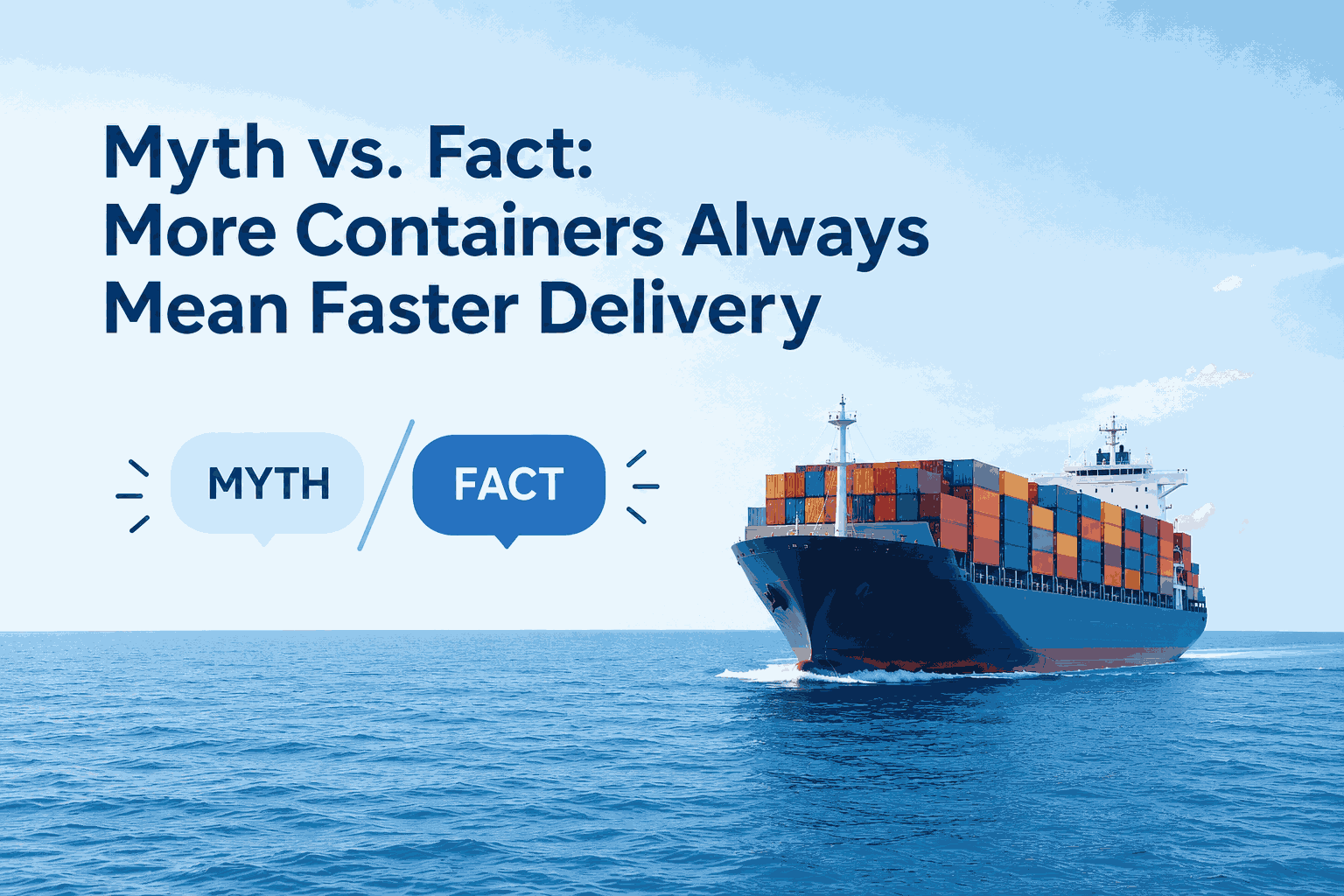
The myth: Shipping more containers means cargo will reach its destination faster.
The fact: The number of containers being shipped does not, by itself, determine delivery speed. Transit time depends on several factors, including vessel schedules, route selection, port congestion, cargo readiness, customs clearance and inland transportation.
For businesses moving goods internationally, container capacity and delivery speed are two different considerations. Having more containers may help accommodate a larger shipment, but it does not necessarily mean the cargo will be loaded earlier, spend less time at sea or clear the destination port faster.
Understanding the difference is important when planning shipments, managing inventory and setting realistic delivery expectations.
Why More Containers Do Not Necessarily Mean Faster Delivery
1. Vessel schedules determine departure times
A shipment can only depart when it is ready for the relevant sailing and meets the carrier's booking and cargo cut-off requirements. The Digital Container Shipping Association (DCSA) explains how documentation, cargo and equipment cut-off times support coordination between shippers and carriers.
Having additional containers does not automatically secure an earlier departure. Additionally, if cargo misses a cut-off, it may need to wait for a later sailing.
2. Port congestion can slow down cargo movement
Even when containers are available and ready to move, port congestion can affect vessel arrivals, loading operations and container collection.
The World Bank's Container Port Performance Index assesses port efficiency using the time container ships spend in port. This highlights why port operations and vessel turnaround times matter when assessing shipping performance—not simply the number of containers involved.
3. More containers can increase handling requirements
A larger shipment may require additional coordination for loading, unloading, documentation, customs clearance and inland transportation.
For example, moving ten containers instead of two may require more handling resources and transport arrangements at the destination. If these activities are not planned in advance, the additional volume can create operational challenges rather than speed up delivery.
The key is to ensure that capacity across the shipment journey matches the volume being moved.
4. The shipping route and service type matter
Transit times depend on the selected route, vessel schedule, port calls and whether the shipment requires transshipment. Two shipments carrying the same number of containers can have different delivery timelines if they use different services or routing options.
5. Customs clearance and final delivery still take time
Arrival at the destination port does not mean cargo is ready for delivery. Depending on the shipment, it may still need customs clearance, document verification, cargo release and inland transportation.
Adding more containers does not automatically shorten these steps. Missing paperwork, inspections, transport capacity or warehouse availability can still delay the final delivery.
Does Shipping More Containers Ever Help?
Yes, in certain circumstances, shipping more containers can improve efficiency—but the benefit usually comes from better planning, consolidation or coordinated handling rather than container quantity alone.
For example, businesses shipping regular volumes may be able to coordinate bookings, prepare documentation in advance and arrange inland transport for multiple containers together. This can improve resource utilisation and reduce avoidable handling or coordination gaps.
Similarly, choosing the right shipment type matters. Full Container Load (FCL) shipping may suit cargo that can use an entire container, while Less than Container Load (LCL) shipping allows smaller consignments to share container space. The appropriate option depends on cargo volume, routing, cost and delivery requirements.
Neither option guarantees faster delivery in every situation. The selected service, sailing schedule, handling requirements and destination processes all influence the outcome.
What Should Businesses Consider When Planning Container Shipments?
Instead of focusing only on container quantity, businesses should assess the factors that directly influence delivery timelines.
Cargo readiness: Is the cargo packed, documented and ready before the relevant cut-off?
Vessel schedules: Which available sailing best fits the required delivery window?
Routing: Does the service involve direct transport or transshipment?
Port conditions: Could congestion or operational restrictions affect the planned timeline?
Customs requirements: Are the required documents complete and accurate?
Inland transport: Is sufficient trucking or rail capacity available at the destination?
Shipment visibility: Can the team monitor milestones and respond to schedule changes?
Planning these elements together can help businesses set realistic delivery expectations and identify potential bottlenecks before they affect the shipment.
What Matters More Than Container Quantity?
More containers can increase the amount of cargo moved, but faster delivery depends on how efficiently the entire shipment is coordinated.
Vessel schedules, port performance, cargo readiness, customs clearance and inland transport all contribute to the final timeline. A delay at any one of these stages can affect delivery, regardless of how many containers are being shipped.
For businesses planning international freight, the priority should be to match container capacity with the right service, prepare cargo and documentation on time, and maintain visibility throughout the shipment journey.
The takeaway: More containers may mean more cargo capacity, but they do not automatically mean faster delivery. Efficient planning and coordination across the supply chain are what help shipments move as smoothly as possible.